A December Night Asks a May Dawn
I remember the night of December 3, 2024. It was my birthday. I was out on a late jog when my mother called, frantic. Martial law. The president had declared it on live television, the first such decree in South Korea in more than forty years, and troops were moving on the National Assembly. I stared at breaking news I could not believe, then flagged down a taxi and headed for Yeouido, where the Assembly sits. Any hesitation, is this dangerous, is this crazy, was crowded out by a single thought: I had to see for myself that this moment was real.
That night, in the chaos outside the Assembly, one question stayed with me. Why does history repeat itself? Why do old wounds refuse to heal, and instead burst open again without warning?
Five months later, on May 17, I was in a car headed for Gwangju. I was tagging along on my wife’s schedule, but there was something I quietly wanted to confirm. Gwangju is the city where, on May 18, 1980, citizens who rose against the military’s seizure of power were crushed by paratroopers. Hundreds were killed, and every Korean movement for democracy since has measured itself against those days. Seoul to Gwangju is four hours. The whole way, hands on the wheel, I kept thinking about that night in December. Where had that night’s fear and anger come from? I felt I might find the answer there.
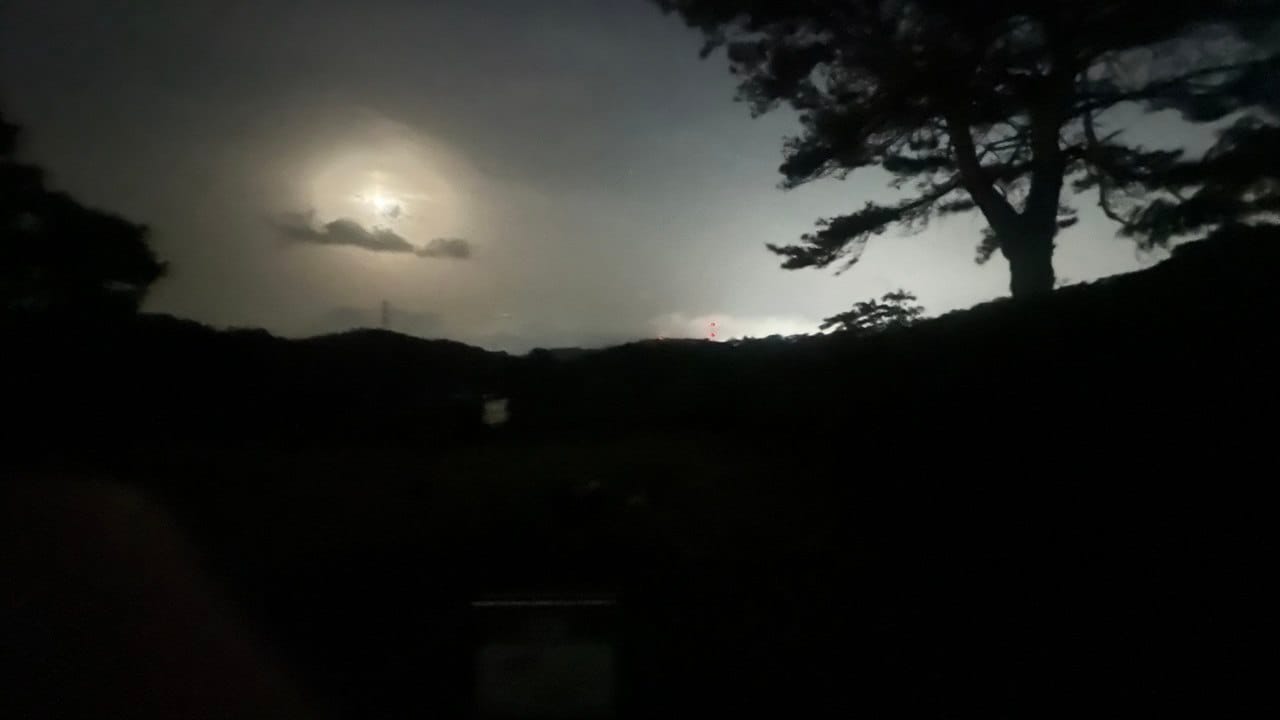
It was past midnight when I reached the Mangwol-dong cemetery, where the dead of May 1980 were first buried. It was silent. The memorial service was long over, and in the darkened grounds there was no drumming, only the sound of insects in the grass. If the night martial law was declared had been a loud chaos outside the Assembly, this was a silence so still it felt heavy.
In the dark I felt for the names on the headstones. Even the moonlight was faint and I could barely make out the letters, but the weight this place held was unmistakable. I bent down and quietly touched the soil of the graves. Maybe the roots of the fear we felt in December reach down into this ground, a ground that has never been fully consoled.
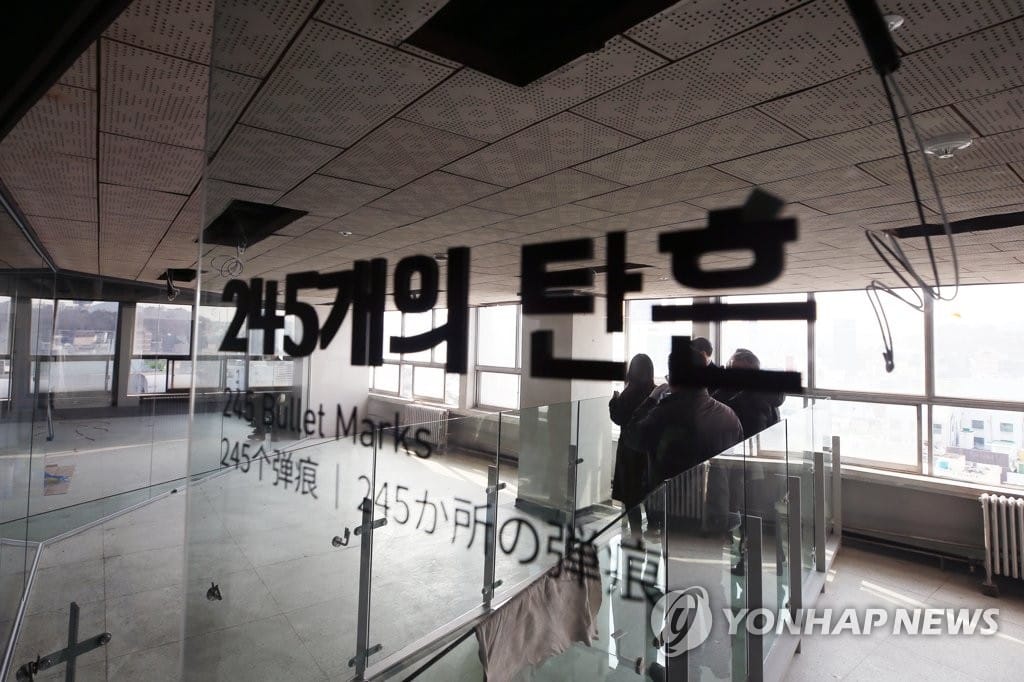
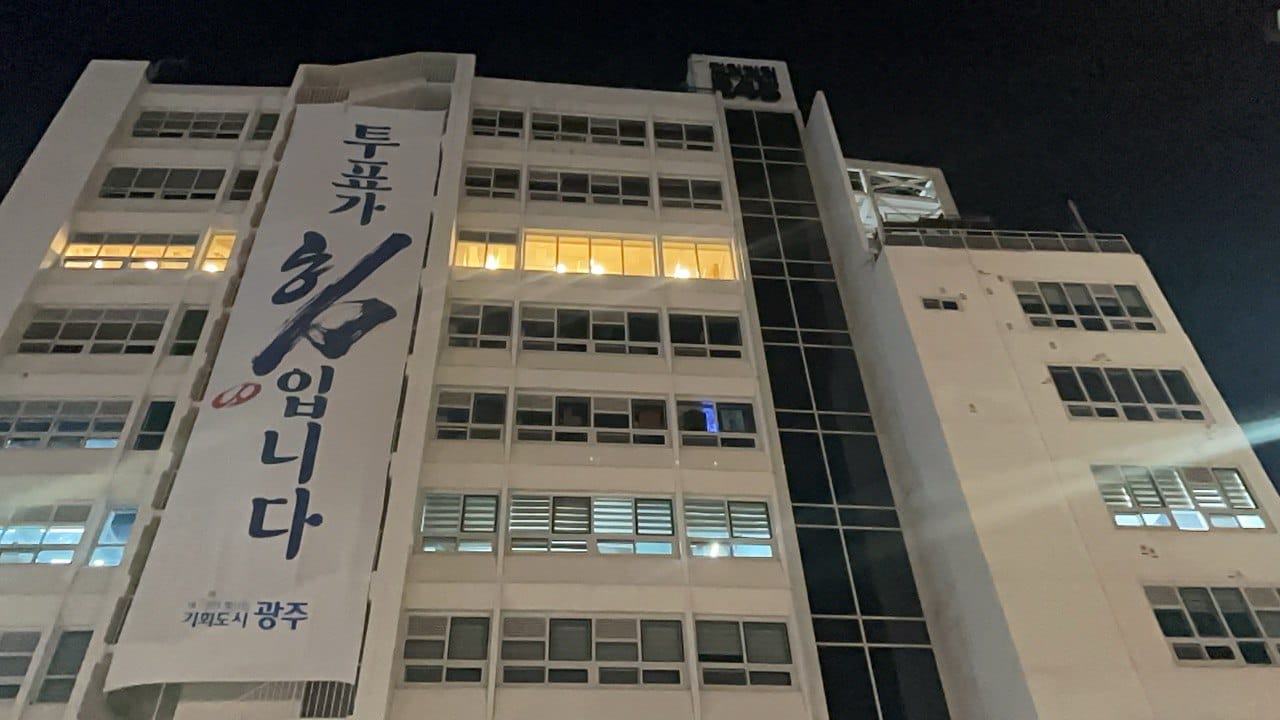
The next day, May 18, in the daylight streets of Gwangju, I saw it with my own eyes. The bullet holes in the walls of Jeonil Building 245, named for the 245 marks left by gunfire from a military helicopter in 1980. They were traces of the past, but they felt like testimony with its mouth still open. On Geumnam-ro, the main street, a banner read “We kept democracy,” and the Assembly in December came back to me. What we had tried to protect was not something new. It was a promise that had already been kept here, in blood.
I was about to head back to Seoul when something my wife said turned me around. “There’s a Section 1 that people rarely visit. The ones there are lonelier.”
I went back to the cemetery. Deeper in, quieter. The place of the nameless headstones. Those who were left out even within May’s tragedy lie there, and that place resembled the fear we had not quite managed to take the full measure of on that December night.
On the road back to Andong, the landscape outside the car window was calm.
What we need to remember is not a stuffed and mounted history. It is to keep calling up the truth buried in the places no one visits. That is the only way to break the loop of repeating history, and with that in mind I leave here this record of May 18, 2025.
Original Korean version written on May 19, 2025. Translated into English with AI in October 2026.
Comments