Reconnecting the Broken Circuit
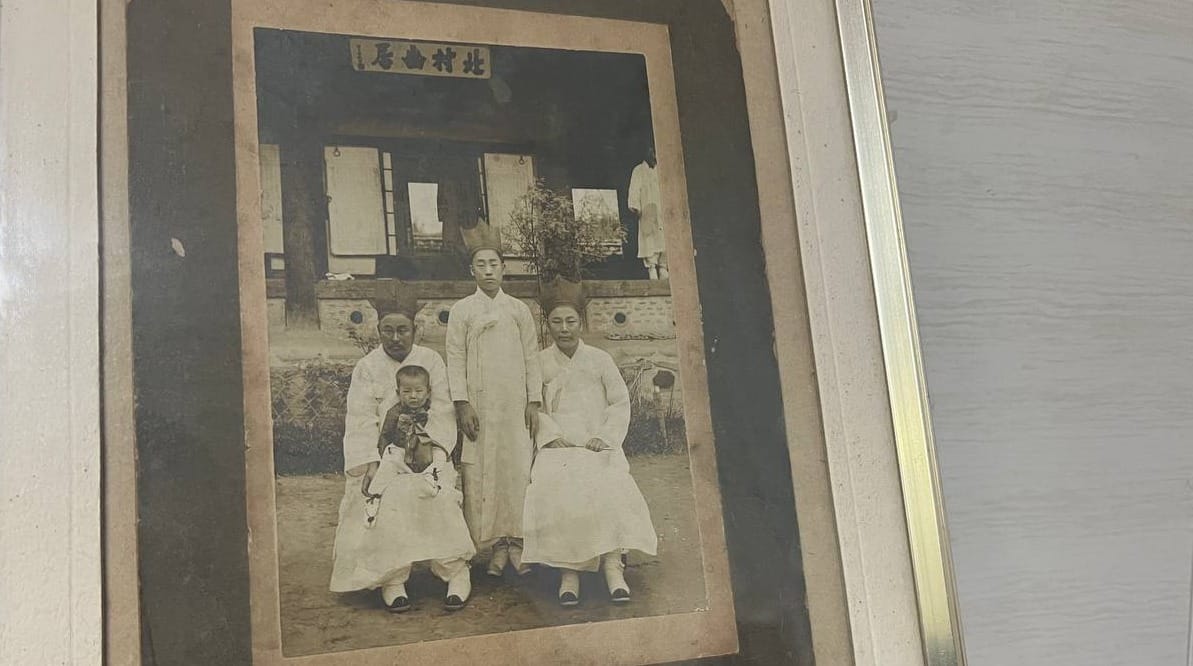
Five years after returning to Andong, a hometown I was never born in, I am only now beginning to understand.
Late 2019. At first it was all coincidence. A one-line news item saying Andong would become a regulation-free zone for medical hemp. A visit to Hahoe village with my father, our first in fifteen years. A rental apartment so cheap I signed the lease on the spot. Looking back, every one of those small triggers now looks like necessity dressed up as chance. Like an old river remembering its original course, my body already knew where it was going back to.
I did not choose Andong. Something, no, they, that land, my roots, had been calling me for a long time. Silently, but without pause. After I arrived I began researching my family’s history, and the deeper I went, the clearer it became. Coming to Andong was not my decision. My roots had summoned me.
My grandfather, Ryu Si-yeon, lived through the Korean War (1950 to 1953), when the front swept up and down the peninsula and millions of civilians fled south on foot in the dead of winter. He watched his wife and children die in front of him. On the refugee road he handed a child to a porter (a jigekkun, a man who carried loads on a wooden A-frame) and lost that child forever. He could only report the death ten, twenty years later.
He started a new family, but he was never able to mourn the first one properly. The pain of losing them, and the guilt, were more than he could bear, and he spent the rest of his life leaning on drink. His eldest son, Yun-ha, lost his mother and his younger siblings all at once. His mind gave way, he left home, and he never came back.
My grandfather’s unspoken pain. The son who broke and walked out. The eight-year-old who vanished with the porter. The four-year-old who died before his eyes, together with his mother, when their vehicle overturned, and the “baby” whose name no one even remembers. Names never called, children never buried. I believed that was their suffering alone.
But my body knew first. Silence, too, is inherited.
The atopic dermatitis I had suffered since childhood grew steadily worse, and I tossed every night with the itching. My skin flared like fire. An itch of every shade, impossible to put into words, rolled along my nerves in waves. The doctors called it an autoimmune disease, but I knew. My body was not attacking itself. The things never spoken, never recognized, the voices never heard, were trying to break out through my skin.
It was not mine. It was the unspoken suffering of the lives that passed before mine. The screams of those never mourned, the circuit of a loss no words could hold, had stayed inside me, intact. My skin burning every night was the clamor of ancestors who had never been properly seen. The tightness in my throat was the weight of the words they had swallowed.
I could not hope for someone else to repair that shorted circuit. I had to align it myself. As the survivor’s share. As the responsibility of the one who had become able to speak. As the duty of the one who remembers.
Following that vibration, I had to call my ancestors’ names again.
Yun-ha, Su-ha, Yang-ha. And the baby whose name was never even written down, the forgotten names. Names that died with their mother in the war, or vanished inside a train station in a porter’s keeping. It was a matter of gathering memories scattered like shards and stitching them together, piece by piece.
A family history in which even who had lived and who had died was uncertain. The pain was too heavy to speak of, and I grew up not even knowing their names. In a blank where the house held not a single old photograph, they were nothing but faint shadows.
But my body noticed first. Those names were still caught in the circuit. They had not been buried. They had been left unattended. Like a circuit with a severed wire, the current could not flow, and only heat was building up.
February 8, 2025, the eleventh day of the first lunar month: the anniversary of my grandfather Ryu Si-yeon’s death. After a long stretch of tracing their lives, I brought all of those names together in one place for the first time.
Grandfather Ryu Si-yeon. His first wife, Ahn Byeong-bok. Eldest son Yun-ha. Second child, a daughter, Jeong-ha. Third son Su-ha. Fourth son Yang-ha. My grandfather’s first family, whom even my father never knew. The first circuit, the one the war smashed to pieces. I called every one of those names and seated them at a single table.
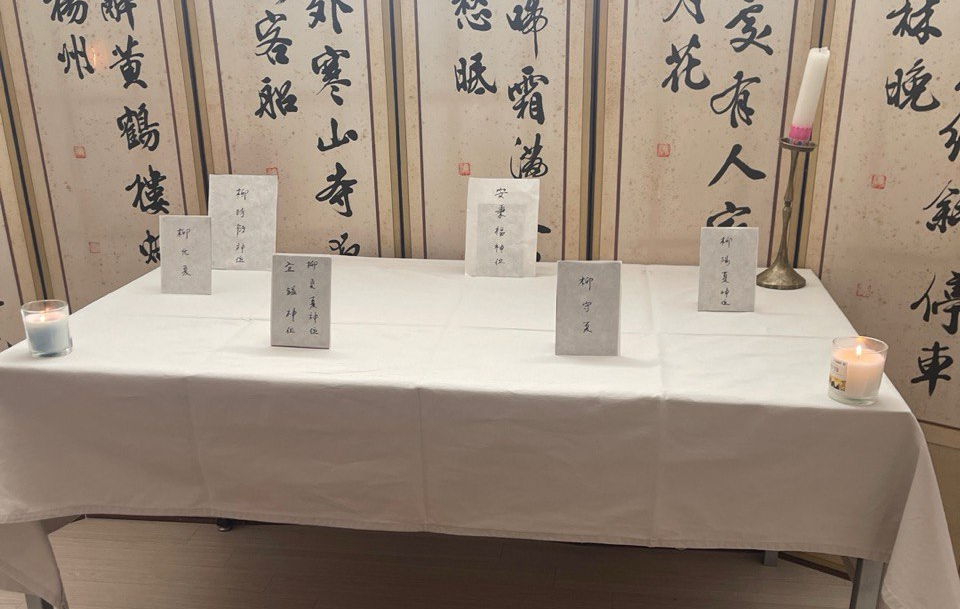
A reunion after seventy years. It was not just a jesa (제사), the rite Korean families hold for their dead.
It was a ceremony to tie off, in words, the time that had never been laid to rest.
It was giving names back to those who had vanished without one, and making a place for souls that had been scattered. It gave their existence, so long pushed aside and unrecognized, and every single thing they had been made to suffer, the rightful place it had been owed all along.
My grandfather’s other wife, whom my father never saw, and the half-siblings born of that marriage. My father, born of a different mother, and his children. My aunt’s descendants. Many layers of split roots sat down at one table for the first time that day. At first it was awkward. We had grown on different branches. How could we share a single root?
But the moment the memorial address was read, I felt the broken circuit reconnect, and the fence of a family that had been shut out close into a whole.
More than seventy years have passed,
and only now is the whole family gathered in one place.Those separated by the tragedy of war
meet again today, at last.Grandfather Ryu Si-yeon,
the heavy guilt you carried in your heart all your life,
and the deep pain of your loss:
we hope you can lay them all down now and rest in peace.Grandmother Ahn Byeong-bok,
you lost two sons, at Yongsan Station and at Waegwan,
and then had to leave this world yourself, so senselessly.
Today, at last, we try to soothe that pain and that han (한, 恨).Eldest uncle Yun-ha,
the road you took because you could not bear it:
only now do we understand that pain, and offer you comfort.Aunt Jeong-ha,
fated to grow up far too soon,
we honor all the pain you endured and all the burdens you carried.Uncle Su-ha, Uncle Yang-ha,
for the fate you met at such a young age,
today we bring you back into the family’s arms.Now that our family is gathered in one place,
may there be no more pain and no more han.
May you rest in peace.
We humbly pray.
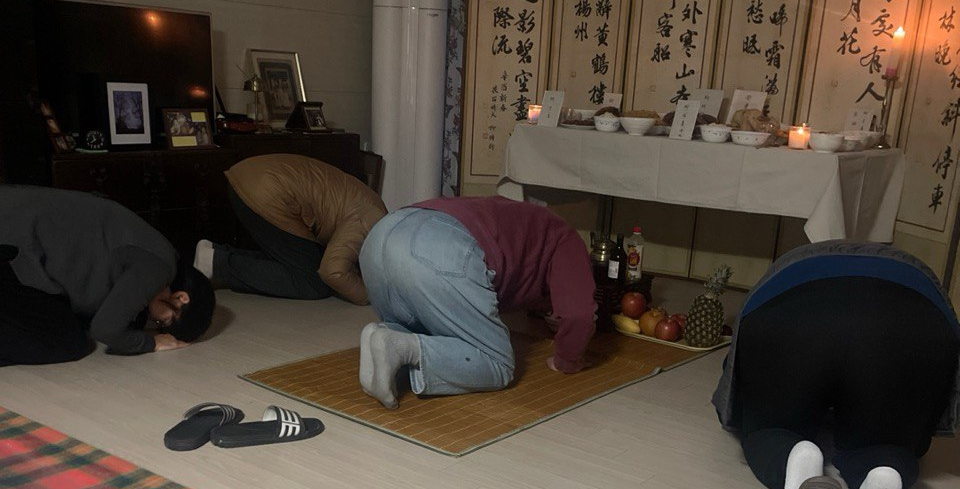
Language became a current running through our bodies,
converting old pain and old silence into light.
(And the newborn who could not be included that day, whose existence has since been mentioned only as a possibility and whose name no one remembers, is honored separately here, on this blog, as a presence that was never confirmed.)
Then on May 8, Parents’ Day in Korea, I called the names again. This time I went further back, and deeper down.
My own grandmother, Lee Hak-gyu, my grandfather’s second wife, who was not buried with the family and had been shut out of its fence for more than forty years. My great-grandmothers and great-great-grandmothers, of whom, under the Confucian lineage law in force since the seventeenth century, nothing survives in the records but a clan name. My fifth-generation ancestor, who had to give up his own eldest son to carry on the line of a brother who had died without an heir. The sons who, overnight, had to call their own father “uncle.” And the second-borns and third-borns no one remembered. Feelings layered up over generations and never properly honored. Griefs. Han (한, 恨), the Korean word for a sorrow that has sunk in deep and found no way out.
Starting from my great-grandfather Ryu Yeong-u and my great-grandmother of the Suncheon Park clan, whose given name no one remembers. Ryu Do-seong, who carried the han of having been adopted into the line himself and then had to send his own grandson out as an adopted heir. Below him, our adoptive great-great-grandfather Ryu Dong-tae, who died at nineteen and, because he was the younger brother, had to be buried apart from his elder brother and his father. His wife, of the Jaeryeong Lee clan. And above them, Ryu I-jwa (six generations up) and Ryu Sa-chun (seven generations up). Not a single photograph, not a single keepsake of them remains. I felt my way back along their traces, upstream.
I wrote a memorial address and offered it to each soul, one by one. Not a sentence was written carelessly. I wrote praying that I would not miss a single letter of their silences and screams, their misunderstandings and sacrifices. Like fitting the pieces of a shattered mirror back together one by one, until a whole reflection appeared.
One of these addresses speaks of the January 1951 retreat, when Chinese forces pushed south and Seoul was evacuated for the second time. Koreans call it the January 4 Retreat, after the day the capital fell again.
To Grandmother Lee Hak-gyu
I respectfully report before your spirit. Even in poverty, you bought chili peppers wholesale in Yeongyang and sold them retail in Seoul, and because you took on the livelihood of the whole family, our family has been able to reach this day.
For putting me where I stand, and for holding the household together so that the line could continue from one generation to the next, I thank you from my heart. Wishing you to be at Grandfather’s side now, within the embrace of the family, we bring soil from your grave to his, so that you may be together and comfort each other. Please lay down the loneliness and sorrow you carried in life, and all your han, and rest in peace.
Though the world may never have given your labor and your contribution the recognition they deserved, in the hearts of us, your descendants, you are always a true mother and an honored grandmother. Now, if only as soil, we lay you to rest beside Grandfather, and we hope your two souls may be at peace together.
May you be at peace in heaven, and we pray that you will always watch over us, your descendants.
To Grandfather Ryu Si-yeon
Only now can we begin, even a little, to grasp the pain and sorrow you bore as you struggled to protect your family in the storm of war. Carrying the grief of losing Grandmother and your children, you still rebuilt a home and carried the family line forward, and for that will and that sense of responsibility we are deeply grateful. Today we have brought soil from the grave of Grandmother Lee Hak-gyu to your resting place.
We wish to lay beside you Grandmother Lee Hak-gyu, who, even in poverty, bought chili peppers wholesale in Yeongyang and sold them retail in Seoul to feed the whole family. May the two of you be together, and lonely no more. Grandfather, lay down every burden of this world now and rest in peace. We, your descendants, will honor your wishes and carry on the tradition and spirit of this house.
The love and longing you carried in your heart for Grandmother Ahn Byeong-bok and the children you lost: we pray with all our hearts that you meet them all now in heaven and let it go.
So that you no longer lie alone in the damp earth, we will soon cremate your remains with care and lay you to rest.
To Grandmother Ahn Byeong-bok
I respectfully report before your spirit. When I picture you setting out on the refugee road in the chaos of the January 1951 retreat, with Yang-ha on your back and Su-ha by the hand, my heart breaks. We will never forget your boundless love, which gave everything, even your life, to protect your children.
We can only be sorry that it has taken more than seventy years to hold a proper rite for you, together with Grandfather.
After you left, Grandfather built a new home with Grandmother Lee Hak-gyu, and because of that our family line could continue. Today we have brought soil from Grandmother Lee Hak-gyu’s grave as well. We are grateful to both of you, who kept the same family in different times.
Grandmother, let that long separation end now. Meet Grandfather again and rest in peace. Find Su-ha and Yang-ha and hold them in your arms, meet Yun-ha and Jeong-ha again, and may the whole family be one. We, your descendants, will carve your sacrifice and your love deep in our hearts and live by them.
So that you no longer lie alone in the damp earth, we will soon cremate your remains with care and lay you to rest.
To Grandfather Ryu Dong-tae and Grandmother of the Jaeryeong Lee clan, we respectfully report.
We, your distant descendants, gather our hearts to honor you both. Grandfather, you ended a short life at the tender age of nineteen and left early, but the branch of our family that began with you has continued without end.
To carry on your line, Grandfather Yeong-u came in as your adopted son and carried your will forward.
Grandmother of the Jaeryeong Lee clan, widowed at the young age of seventeen, you held loneliness and sorrow alone, and yet you embraced the adopted boy as your true son and raised him with devotion.
Without your great love and sacrifice, we, your descendants, would not exist today. We are deeply grateful for that grace.
Now we bring soil from Grandfather Ryu Dong-tae’s grave to rest beside his father, Grandfather Do-seong, from whom he had been kept apart for so long.
This was not mourning. It was alignment. It was a craft of language, and an ethics of existence, for making the circuit a circuit again, for reconnecting the severed path.
It was not restoring a lost history. It was writing a new one. We cannot change the past, but how we remember it is ours to decide.
And now it is time to pass all of this through fire.
On May 26 we will cremate our ancestors’ bones. We will lift them out of the damp earth and offer them to the fire, as the final rite in the alignment of the entire lineage that brought me into being. Names that were being erased by damp and decay grow sharp again in the flames.
This is igniting the circuit so that it can cycle. A life, a love, a silence can only pass down to us under the name “we” after it has gone through fire. Fire does not destroy. It circulates. Just as ash-gray memory becomes the soil for new life.
And I realize: the time they lived through was not just “the suffering of distant ancestors.”
Without that suffering, if they had not lived that suffering first, I could not have lived at all.
Their loss was the condition of my survival.
The winter they endured became the soil of my spring.
Now my atopic dermatitis is slowly subsiding. The fire in my skin is dying down, and new skin is growing in its place. The circuit has found its place, and the energy has begun to flow in the right direction.
That flow has begun to redraw my whole life.
What was never said has been said. The names never called have been called.
There was nothing else I could possibly have said to them but this.
“To all our fathers and mothers.
I think of the seasons you passed through.
Your pain and your sacrifice were never in vain.
That I can be here at all is entirely because of you.
With deep apology and gratitude, with love and respect,
I offer you this heart.
You went through so much.”
This is my confession, and it is also an act of jingbi (징비, 懲毖): their unspoken truth reaching the world through my mouth. Jingbi is the word at the heart of the Jingbirok, the memoir Ryu Seong-ryong wrote after the Japanese invasions of 1592. It means learning from past suffering so that it is not repeated. This is the record they could not leave, the book of lessons and wisdom I take down in their place.
And with this confession finished, I prepare to move on to the next ritual. Burn the bones, gather the soil, stop speaking, and finally open one more seat. Beyond a private ceremony, I am preparing to draw a wider circle, for the memory of a community.
Until that night comes, I bow my head and wait.
Fathers, mothers,
the pain and sacrifice you went through were not in vain.In your silence, I heard your voices.
In your absence, I felt your presence.Thank you.
And now I put that pain into words and send it back out into the world. The moment the circuit is complete, everything begins to flow again.
Words remain, words flow, words come back to life. When the words that flow from this mouth reach someone’s ear, another circuit will open, another memory will wake, and the endless cycle of words will go on.
Original Korean version written on May 20, 2025. Translated into English with AI in October 2026.
Comments