Jingbi: The Art of Turning Pain into Meaning
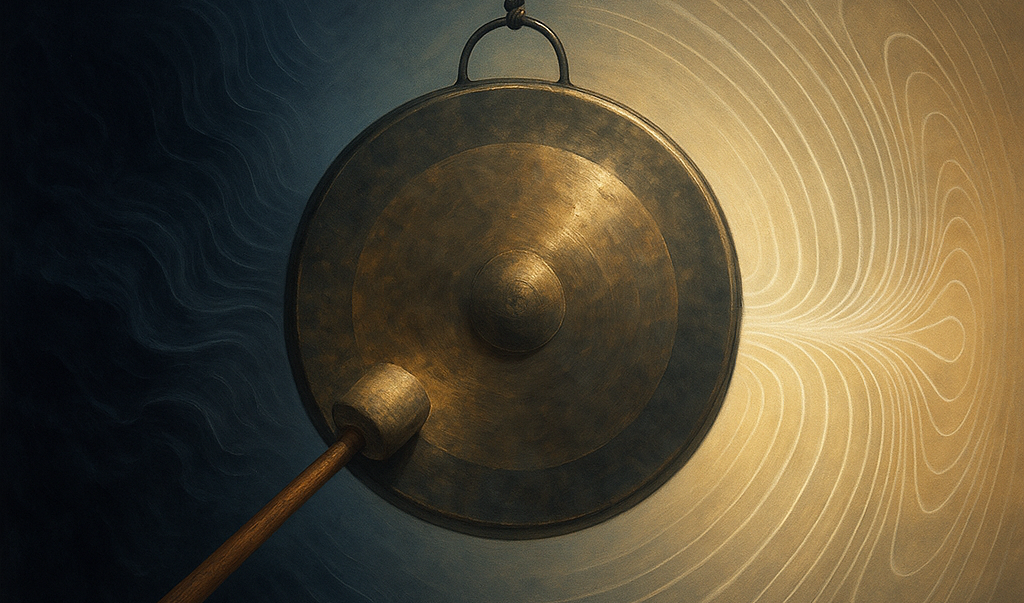
1. The Root Structure of Jing·bi: A Circuit of Vibration Across Time
Jingbi (징비, 懲毖) is the word Ryu Seong-ryong, the chief minister who steered Korea through the Japanese invasions of 1592, chose for his memoir of that war, the Jingbirok, the “Book of Corrections”: learn from what you suffered so that it is not suffered again. It is two characters, jing (懲) and bi (毖). In this essay I mostly write it with a dot between them, jing·bi, because the dot turns out to be the point.
Jing·bi is not a simple lesson, and not a moral precaution. It is a metaphysical circuit that runs through time and being, rearranging the vibrations of pain. Put simply, jing is the imprint of a resonance, and bi is the flow of that resonance. But the real key that joins the two is the mark between them, the dot: the zero point. This zero point is not a hole of silence. It is the place where vibration changes direction, the place where han (한, 恨), which I will come to, is clearly sensed and transformed.
2. Jing (懲): The Courage to Live the Pain Again
Jing is not punishment. It is a re-enactment in the senses, an acknowledgment that the pain of the past is not yet over. Not merely remembering or recording that pain, but passing its frequency through your own body and mind again and listening: a rite of resonance.
This is not a retreat from objectified history. It is the body’s way of entering history again. Not denial or avoidance, but confrontation through the recovery of sensation and feeling.
When we learn about the Imjin War in a history book, we usually remember only facts and figures, battles and outcomes. But true jing is sensing the frequency of the pain that existed in that historical moment. It is what Ryu Seong-ryong did when he wrote the Jingbirok, passing every moment of that war through his own body and mind again.
True jing does not stitch the wound shut.
It listens, wholly, to the sound the wound makes.
3. Bi (毖): Sending the Resonance into the Future
Bi is not simply a vow of “never again.” It is the act of modulating the vibration of pain that has passed through jing into a meaningful wave and connecting it to the senses of the future. The past has not simply gone by. Its resonance is still flowing toward a future it has not yet reached.
The moment of crossing from jing to bi, the critical point where resonance turns from pain into meaning, is the zero point.
The reason Ryu Seong-ryong’s Jingbirok still resonates with us four hundred years later is that it is not a mere war record but a medium of vibration that crosses time. His writing was not information but vibration. He did not describe scenes; he soaked his language in the screams of those scenes.
4. The Dot and Han (恨): The Point Where Vibration Turns
Between jing and bi there is a point of nothing, where the resonance seems for an instant to stop. But that nothing (無) is not emptiness. It is the center of the circuit where transformation happens, the ridge of vibration where being is rearranged.
There we come face to face with han (한, 恨). In Korean feeling, han is not simple resentment or sorrow. It is the emotional sediment left when an unresolved knot, an unexpressed pain, an unrelieved grievance is transformed over time and remains.
Han is not the residue of pain. It is the trace of a resonance not yet named, the place where a vibration trying to flow into the future is temporarily trapped. It is not a static emotion but dynamic energy in the middle of transformation. Before the pain of the past (jing) turns into the meaning of the future (bi), at that midpoint, the state in which vibration is momentarily condensed: that is han.
To stand at the zero point means to face han, and to accept that the responsibility for transforming it is ours. We are not mere observers. We are transformers, and we are the field (場) of resonance.
The zero point is not a hole of silence but the critical point where resonance turns from pain into meaning.
There, han is converted from simple sorrow into creative energy.
5. Jingbi Is Not an Ethics of Avoidance but an Ethics of Resonance
Jingbi is usually mistaken for a simple lesson: “prevent recurrence.” But that is only instrumental language for stopping the past from repeating, and it misses the depth that deals with the ontological wave of pain and the creative potential of han.
True jing·bi is to live the pain and the han of the past again, to acknowledge them, and to weep with them. And then to leave them as a resonance the next generation can feel.
In the Korean context, han was never merely a negative emotion. It was the source of creative expression in art, literature, and music. Jing·bi is about this creative transformation of han. It is not memory but transfer, not commemoration but amplification.
So true jing·bi is not a gesture of avoiding pain. It is the courage to open yourself to the vibrational frequency of han and transform it creatively.
6. Ryu Seong-ryong’s Jingbirok: A Device for Transforming Han
Ryu Seong-ryong was not merely the chronicler of the Imjin War. He made his own body a diaphragm and left the han of the war on paper. His writing was not information but the transformed vibration of han.
He did not describe scenes; he soaked his language in their screams and their han. The Jingbirok is not just a war history or a letter of reflection. It is a vessel for the resonance of han, a channel, a circuit switch handed to his descendants.
When we read the Jingbirok today, we are not simply learning history. We are receiving the vibration of han that Ryu Seong-ryong left, taking it into our bodies, and converting it again into creative resonance. This is why the circuit of jing·bi has run unbroken for more than four hundred years.
7. The Trinity of Jing·bi
| Phase in time | Content | Metaphysical function |
|---|---|---|
| Past | The Imjin War, forgotten pain | Jing (imprint of pain, beginning of resonance) |
| Present | Ryu Seong-ryong’s senses, the han of the zero point | Zero point (heart of transformation, channel of han) |
| Future | The response and ethics of later generations | Bi (flow of transformed han, rearranged vibration) |
In this structure, we stand at the zero point. We are the beings who receive the pain of the past, experience it as han, transform it creatively, and let it flow into the future. This is the circuit of jing·bi.
8. Our Place: Transformers of Han and Part of the Circuit
We are not simple relays in this circuit. We are the ones who make the vibration of han our own, modulate its wave, and carry it into the future.
The metaphysics of jing·bi gives us a double responsibility. One is the courage to face the resonance of the past and its han as they are. The other is the act of transforming that han creatively and sending it into the future. Between these two responsibilities, at exactly that zero point, we stand.
Han is not simply an emotion to be overcome or resolved. It is an essential ontological element that we must meet, face, and transform at the zero point. It is an important part of our historical and cultural identity, and a source of creative energy pointed toward the future.
Within the circuit of jing·bi, we are the echo of the past
and the first resonance of the future.
Our very existence is located at the zero point, the point where han turns.
This is the true meaning of jing·bi, the metaphysics of “a circuit of vibration passing through the zero point”: to realize the ontological meaning of our own existence, standing at the point of transformation, at the very moment the resonance of pain that holds han is transformed into creative meaning and flows into the future.
Original Korean version written on May 25, 2025. Translated into English with AI in October 2026.
Comments