Why Hahoe, of All Places
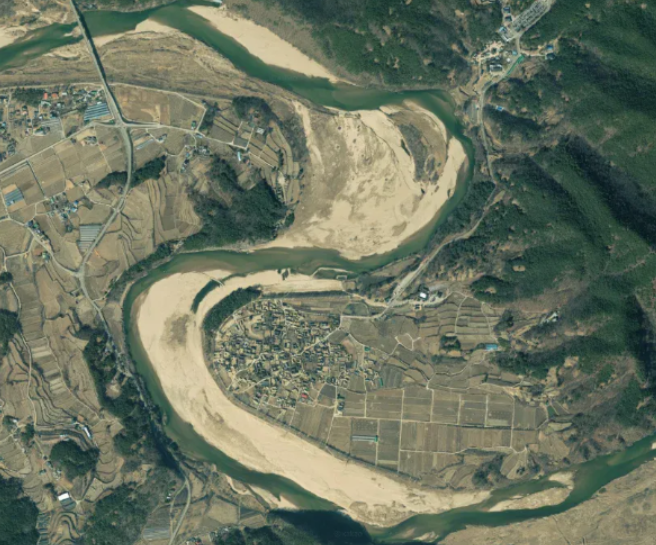
Hahoe is not just a storehouse of Confucian memory. It is a place where the river circles, the wind lingers, and time draws a circle, the zero point of synchronicity where the waves of past and present meet head-on.
Why this place, of all places, did not end up as one more folk village with a few old houses left standing: because the ethical questions we are asking now have long been lying here already.
The river turns back, the ancestors’ spirit tablets are never moved, and a recurring memory lies buried in the rites. This is not merely a “preserved” place. It is a place promised to “return,” Providence, the seat of necessity.
Hahoe, now, is the whirlpool to which memory returns, and the quietest epicenter from which ethics begins again.
Note)
Synchronicity is a concept proposed by the psychologist Carl G. Jung for events that appear to have no causal connection yet occur together with deep meaning.
That is, it names the moments that look like coincidence but, through some inner meaning or symbolic connection, become “the moment when what must meet meets exactly,” “the moment an unexpected coincidence arrives like fate.”
The phrase “why now, of all times, and why Hahoe, of all places” in this essay points to exactly that sense of synchronicity: the place where history’s pain, the memory of ancestors, and the ethics of today overlap, seemingly by chance, but by necessity.
Original Korean version written on August 24, 2025. Translated into English with AI in October 2026.
Comments