For a Country Too Busy Surviving
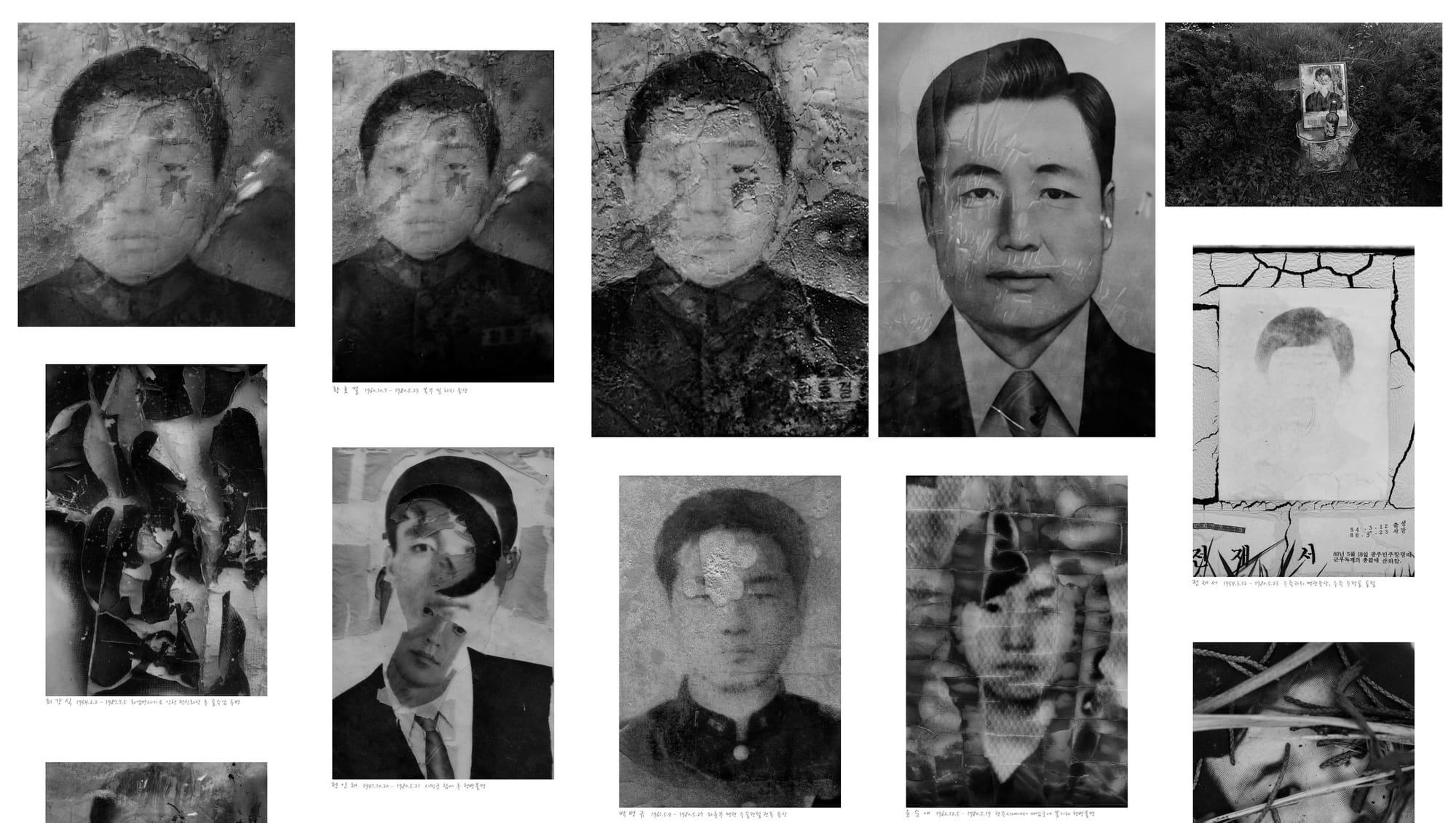
Notes Toward a Collective Emotional History of Korea
On the night of December 3, 2024, the president of South Korea, Yoon Suk-yeol, declared emergency martial law. Soldiers moved into the National Assembly. Lawmakers climbed over the fence to get inside and vote. Citizens gathered in front of the building. Six hours later, martial law was lifted.
It was my birthday.
So for me that night isn’t a news story. It’s a date. It already came around once, in 2025, and it will keep coming around every year.
What followed was impeachment, then removal from office, and on February 19, 2026, the Seoul Central District Court sentenced the former president to life in prison as the ringleader of an insurrection.
Since that night there has been one thing I still can’t understand. I can grasp the anger that was hanging in the air, the anger that made martial law thinkable. But anger alone doesn’t explain the rest.
Why did so many people support it?
It would have been convenient to say they were simply villains and leave it there. But when are human affairs ever that simple? Some things are stubborn and difficult, and they don’t go away because you look elsewhere.
For a long time, Korea’s political divide has been explained through familiar frames: conservatives versus progressives, generational conflict, regional rivalry. All of these are true. Election systems, media structures, and economic interests create conflict too.
But none of this quite explains why the division keeps repeating and never seems to burn out. Elections end, governments change, verdicts come down, and the emotional intensity of the conflict barely drops.
So I wanted to try reading this history not as a timeline of facts but as a timeline of feelings, the ones left behind by the people who lived through those facts. Maybe what we’re fighting over isn’t only today’s policies. Maybe we are living out a present in which different people’s different pasts have each flowed into a present of their own.
I want to call this a collective emotional history: the history of feelings that have settled in layers inside a society and keep coming back to life in its political judgments and its relationships.
The events may be over. The feelings may not be.
If that’s true, then the questions we ask about political conflict have to change. Not just who was right, but what did these people lose, what were they afraid of, and what have they not yet been able to grieve?
Because before a conflict is a clash of logic, it is a clash of memories that have not yet found their place.
The Fall of Joseon and the Memory of Colonization
One of the deepest fault lines in Korea’s collective emotional history is the fall of Joseon, the dynasty that had ruled Korea for five centuries, and the thirty-five years of Japanese colonial rule that followed, from 1910 to 1945.
It wasn’t only that a dynasty ended. What stayed behind was the shame of failing to protect the country, the self-reproach of having collapsed from internal division, and the helplessness of being able to do nothing in the face of outside power.
That experience later split in two directions. On one side, this feeling remained:
Lose order, and we fall again.
On the other side, the opposite:
Leave corrupt power and entrenched privilege alone, and we fall again.
One is a fear of collapse. The other is a rage at injustice. They look like opposites, but they begin from the same memory.
The memory of losing a country.
Divided Memories of Survival
As the country was coming apart, people faced the same question and gave different answers.
How do we survive?
The Donghak Peasant Uprising of 1894 carried the rage of the oppressed and a fierce demand for dignity. Its declaration that people are Heaven asked, under the weight of a rigid class order and foreign pressure, where a human being stands.
But the uprising was crushed. Its leader, Jeon Bong-jun, was executed, and countless peasant soldiers died. In that lineage I see one feeling repeating itself:
We resisted and we lost, and the losing isn’t over yet.
The choices of those who accommodated or collaborated with colonial rule are far more complicated. Some actively chased power and profit. Some genuinely believed the colonial system was legitimate. Some complied to make a living, some compromised to protect their families, and some had almost no choice at all.
These differences must not be erased with a single word.
After liberation, Korean society never fully sorted out these layers. The purge of collaborators was left unfinished, and much of the colonial era’s personnel and institutions carried straight over into the new state.
That unfinished business settled on one side as anger that justice was never done, and on the other as fear that digging endlessly into the past would tear the community apart again.
Liberation in 1945 wasn’t an ending either. The same question came right back:
How do we build a country?
Syngman Rhee, who would become the South’s first president, chose to establish a separate government in the South within the emerging American-led order, and to make anticommunism the founding principle of the state’s existence.
Kim Ku, the leader of the independence movement’s provisional government, attempted negotiations with the North and opposed a separate government. Independence in a divided country, he believed, was not full independence.
Both men had fought for independence. After liberation, their paths split.
And so, to this day, one side sees Rhee as the founding father and the other as the man responsible for division and authoritarianism. One side sees Kim Ku as a visionary of unification and the other as an idealist who failed to read the international situation.
That difference is a matter of historical fact and judgment. But fact and judgment alone don’t explain why the argument still burns this hot.
Inside the memory that defends Rhee is a fear: if order collapses, we could lose the country again. Inside the memory that can’t let go of Kim Ku is a grief: division is a loss that has never ended.
After they die, historical figures become vessels for collective emotion.
The Pain of Deciding and the Pain of Being Decided For
Through liberation and the Korean War, Korean society went on to accumulate two more enormous memories: industrialization and democratization.
In the memory of industrialization is the experience of escaping poverty. People rebuilt a country out of the rubble of war, fed their families, and made sure the next generation would live better than they had. Looking only at today’s abundance, it’s hard to grasp how desperate those people felt.
By today’s standards, the sacrifices the state demanded of individuals were far too great, and authoritarian rule produced unmistakable oppression. But for the people standing in that place at that time, the question was not only the abstract one of whether they preferred freedom or dictatorship.
Can the country survive? Can I feed my family? Will my child go hungry?
Faced with those questions, people had to put some things off and choose others first.
The memory of democratization starts from a different place. There was growth, but you couldn’t speak. The state grew strong, but there were times it did not protect its citizens. The cost of the state’s decisions was paid by people who had no say in them.
Gwangju is one of the deepest wounds in that memory. In May 1980, in the southern city of Gwangju, citizens were killed by their own military, by state violence, and for a long time the truth of it could not be spoken.
So in the memory of democratization, the state can’t be something to be protected unconditionally. The state must be questioned. Power must be watched.
Here the two memories collide head-on. The industrialization generation says:
We carried it.
The democratization generation says:
We were made to carry it for you.
One remembers more of the pain of deciding. The other remembers more of the pain of being decided for.
Anyone responsible for a community sometimes faces a decision in which every option hurts someone. Whether you lead a nation, run an organization, or are a parent in a family, standing in the place of responsibility sometimes means you can’t pick only the good things. You have to make a choice you can’t avoid.
But the fact that a decision was hard doesn’t erase the pain of the people it hurt. And the reverse: acknowledging the pain of those harmed by a decision doesn’t make the pain and the responsibility of the person who had to make it disappear.
The memory of industrialization remembers better the pain of those who had to decide and carry the consequences. The memory of democratization remembers better the pain of those who were asked to sacrifice beneath those decisions.
So each side’s story sounds like an insult to the other. The pride of the industrialization generation sounds, to the democratization generation, like glorifying dictatorship. The criticism of the democratization generation sounds, to the industrialization generation, like a denial of everything they sacrificed and achieved.
Not because either memory is false. Because truths seen from different places have never yet been set down in the same place.
Words That Banish Each Other from History
One of the most powerful weapons in Korean politics is the label. Two words stand out: chinil (친일) and jongbuk (종북).
Chinil means pro-Japanese, and it carries the historical fear of handing the country over to outsiders. Jongbuk means following the North, and it carries the historical fear of the country being toppled from within.
Historically, the two don’t refer to the same thing, and morally they aren’t the same concept. The actual history of collaboration with Japan and the actual history of allegiance to North Korea each have to be judged on their specific facts.
But the moment they operate as political labels, the two words acquire a similar function. They turn the other person from an opponent in an argument into someone who should not exist in this community at all.
It’s stronger than saying you’re wrong. It says you are the one destroying this country.
That is how a policy difference becomes a war of survival. Compromising with the other side is no longer adjusting an opinion. It’s shaking hands with treason.
This political language is possible only because the memories of losing the country, of division, and of war are still in the present tense.
What Met on That Night
December 3 was the moment these emotional strata all showed up in a single scene.
The martial law declaration, and the language used afterward to justify it, repeated the same phrases: anti-state forces, the free constitutional order, the need to protect the nation. What that language appealed to was not a new feeling. The Cold War fear that enemies within could bring the country down was summoned back into the present tense.
For the citizens who ran to the National Assembly on the other side, an entirely different memory was at work. The sight of soldiers entering the legislature summoned Gwangju, military dictatorship, and state violence all at once. The sense that the military must never again be allowed into politics stood on decades of accumulated memory.
Both memories were in the same place that night. But one side held the power to declare martial law and sent troops to the Assembly, and the other side went to stop them.
The feelings were on both sides. The power was on only one.
So the responsibility is on one side too.
Understanding a fear is not the same as covering up what that fear did. Precisely in order to assign responsibility accurately, we also have to see what emotional soil keeps making such actions possible, again and again.
No feeling disappears because of a trial. The fear is still there.
When the verdict comes down, one side will say we won, and the other will call it a political trial.
The Memory of the People Holding the Flag
The people who turn out for the Taegukgi rallies (Taegukgi is the South Korean flag, and these are the conservative street rallies where it is carried) can be summed up with a single word: far right. But that name alone can’t explain why elderly people come out into the cold holding the national flag and portraits of Syngman Rhee and Park Chung-hee, the general who ruled from 1961 to 1979 and drove the country’s industrialization.
Among the feelings that move them, one of the most important is the fear of national collapse.
There is a generation that lived through the Korean War, or grew up close to its memory. They had Cold War anticommunist schooling, and they lived the passage from poverty to industrialization.
To them, the Republic of Korea was never something that simply existed. It was a country that could have vanished. From that vantage point, Rhee and Park aren’t just two politicians. They are symbols fused with the memory of building and holding a nation together out of chaos.
So an event like a presidential impeachment, or the mass candlelight protests that bring one about, is experienced by some people as something far larger than a change of government. It feels like the very order they spent their lives protecting is being repudiated.
Was there ever another place in society where that fear could be spoken and acknowledged?
The less a fear is acknowledged, and the more it is used only as fuel for political mobilization, the rougher and more aggressive the language it comes out in.
Behind the endless repetition of ppalgaengi (빨갱이), the Korean slur for a communist, there is hatred. But there is also a fear that never found any other words.
The Memory of the Dismissed Teachers
On the other side, too, there is time that hasn’t ended.
In 1989, teachers founded the Korean Teachers and Education Workers Union while it was still illegal, and roughly 1,500 of them were fired for it. For the people who lived it, this was never just a labor dispute. It was the memory of losing your job and your daily life because you said what you believed was right.
That experience merged with the longer memory of Korea’s democracy movement. The memories of many struggles against state power, Gwangju, the labor movement, the sacrifices along the road to democracy, were read as one lineage. Inside it is a feeling like this:
We were punished for speaking. We fought for what we believed was right, and we lost too much.
That memory was a vital engine of democratization.
But as with every group’s memory, a wound can harden the moment it becomes the basis of legitimacy. The fact that we were persecuted in the past doesn’t make every judgment we make today correct.
When the memory that we were right turns into the defense that any criticism of us is persecution starting over, the legitimacy of the past can block reflection in the present.
This isn’t a call to deny that memory either. The opposite.
A wound that has never been fully acknowledged has to keep proving itself.
So it never gets to rest.
Why This Conflict Never Ends
It’s hard to explain the persistence of Korea’s conflicts by a shortage of information or a failure of persuasion alone.
We moved on to the next era too fast.
Before we could grieve the loss of the country, colonization came. Before we could sort out the memory of colonization, division came. Before we could accept division, war came. Before the war dead were all buried, industrialization began. Before we could look back at what industrialization cost, democratization came. After democratization came globalization and the 1997 financial crisis, the one Koreans still call the IMF crisis, and then the digital transition and a generational turnover rolled in.
We were busy surviving. So we grew used to moving on to the next stage rather than settling accounts with the last one.
Meanwhile the memories didn’t disappear. Politics picked them up and used them.
Chinil, ppalgaengi, dictator, jongbuk, tochak waegu (토착왜구, “homegrown Japanese,” a newer slur for the first), leftist, reactionary.
Each word holds a trace of real history. But the more they are repeated in elections and political mobilization, the more they become weapons for attacking an opponent in the present rather than a language for understanding the past.
Unsettled memory doesn’t disappear. It gets mobilized.
I think we can give a name to what we have failed to do.
We have not yet mourned.
Mourning Is Calling by Name
The mourning I mean here is not forgetting. It is not forgiving, and it is certainly not letting anyone off the hook.
Mourning is calling by name.
It is telling, properly, what happened.
Who was there. What took place. Who did what, who had it done to them, and who survived.
It is naming the person, the deed, and the event. This person was here. This happened. This happened to this person.
To call someone by name is to acknowledge that they exist. It is an act of seeing.
So mourning is the opposite of forgetting. And to name properly, you have to be accurate.
If it was state violence, call it state violence. If it was a massacre, call it a massacre. If it was collaboration, call it collaboration. If it was torture, call it torture. If it was a firing, call it a firing.
Blur the name and you blur the responsibility. So naming carries both fact and responsibility inside it.
Mourning doesn’t stand opposite to establishing the truth. It comes after. The more precise the truth, the more precise the mourning.
And it isn’t only the events that need naming. The people do too.
Who died. Who survived. Who decided. Who paid for that decision. Who carried their own share of pain, and who was made to carry someone else’s.
Name the events and erase the people, and you end up with a history book, but no mourning.
Seen this way, what mourning does becomes clear. Mourning doesn’t remove the grief. It moves the grief to a different place. It takes a memory that kept exploding in the middle of the present and sets it down in the past, where it belongs.
So mourning is a technique of feeling, and at the same time a technique of time.
So Why Doesn’t the Mourning Happen?
To call by name, you need a name to call.
Who died. Who was hurt. Who was driven out. Who was afraid. Who decided, and who paid for the decision.
And we never recorded enough of it.
There is a man in his seventies holding a flag in the square. We don’t know where he was born, what he lived through, whom he lost, or why he was standing there that day. All we know is the flag in his hand.
There is a teacher who was fired in 1989. We know the number: about fifteen hundred. But we don’t know what one of them said to her family when she got home that day, what work she did afterward, or what she still can’t forgive.
The numbers survived, but the people vanished. The camps survived, but the lives vanished.
That’s why mourning is hard. Mourning doesn’t happen toward an abstraction. It happens toward something concrete. You need a name, a face, and a life before you can grieve. A faceless opponent is hard to understand, and nameless pain is hard to mourn.
Before we ever hated each other, we never knew each other.
So mourning needs records.
Memory lives inside people. When the person dies, it goes with them. A record sets that memory outside. It lets someone else call the name again. It keeps a person who was here once from being erased twice.
Pain that was never recorded is hard to mourn. Pain that was never mourned is easy to mobilize.
Seen this way, recording isn’t simply preservation. It’s what lets a community have its past as past.
A Place Where Competing Memories Can Sit Together
So is what Korea needs a single correct history? I find myself believing that less and less.
Historical facts must be established rigorously. State violence must be called state violence, collaboration must be investigated on concrete evidence, and wrongdoing must carry responsibility.
But establishing the facts and recording how people experienced and remembered those facts are two different things.
One old man, recalling the Park Chung-hee years, might say:
That was the first time I ever ate my fill.
Someone else, recalling the same years, might say:
They took my father away.
Average the two memories and both disappear. Pick one as the correct answer and the other loses its place to speak.
What’s needed isn’t to merge the two memories into one. It’s a place where different memories can sit inside the same history without being erased.
The voice of the old man who held the flag has to be able to enter that place. So does the voice of the teacher who was fired. So does the pride of the people who built the industrial economy, and the resentment of the people who were sacrificed to build it.
There’s no need to blend their words into one right answer. First, just leave them as they are.
Who said what. When they said it. What they lived through themselves and what they heard secondhand. Where memory ends and interpretation begins. What they still can’t bring themselves to say.
Leave all that in place, unerased.
Then, for the first time, we meet not an abstract conservative or progressive, but the person who came to hold that memory. We can call that person by name.
And that’s where mourning begins.
How to End a History That Hasn’t Ended
We passed through too much history in too little time. The fall of a dynasty, colonization, liberation, division, war, industrialization, dictatorship, democratization. Events that would take centuries elsewhere piled up within a few generations. And the people who lived through all of it are still living together in the same society.
So it’s no surprise that different memories exist. The problem is how those memories meet.
Until now we have used memory as a weapon far too often. We erased the other side’s memory, or used our own to pass judgment on the other side’s right to exist.
But reconciliation won’t be a state in which one memory wins. Merging different memories into one isn’t reconciliation. Reconciliation is letting each other’s memories sit together inside one history without being erased.
Understanding the fear of the old man holding the flag doesn’t require agreeing with his claims. Acknowledging the grievance of the fired teacher doesn’t require justifying every choice her union made. Seeing the fear inside Syngman Rhee’s choices doesn’t make his wrongs disappear. Acknowledging the grief in Kim Ku’s defeat doesn’t declare that every judgment he made was right.
Understanding and agreement are different things.
For too long we couldn’t tell them apart. We thought acknowledging the other side’s wound meant losing. We thought understanding their fear meant endorsing their politics. So we didn’t listen to each other’s stories.
But what goes unheard doesn’t go away. It comes back louder.
That’s why I think something is needed before political unity. Before persuading each other, recording what each of us remembers. Before evaluating, letting people speak. Before merging everything into one conclusion, preserving the different originals.
Recording who lost what, what they feared, what they were proud of, and what they are still grieving.
When enough of that has accumulated, we will be able to see, for the first time, Korea’s collective emotional history. Not a history that records only who was right, but one in which people’s names remain. One in which what each person lived through remains.
Then we will be able to call each other’s memories by name. Mourning begins there.
Mourning doesn’t erase the other person’s history. It tells what happened as having happened. It calls that person by that name. And it makes a place for the memory so named to return to.
Only when the past has gone back to its place can the people of the present meet in the present.
To end a history that hasn’t ended doesn’t mean forgetting it. It means finally being able to have it as past.
First draft December 17, 2025. Revised September 7, 2026.
Further Reading
Jingbi (懲毖): The Art of Turning Pain into Meaning. On sensing past pain instead of avoiding it, and turning it into meaning the next generation can use.
The Swallow That Returned to Ipgyodang. How a community makes itself by deciding what to remember. On restoring the lectures at Byeongsan Seowon, a Confucian academy, and on the problem of sources and memory.
The Future Is an Interpretation of the Past. Why the memories of a vanishing generation must be recorded here and now, and how one person’s memory rewrites a community’s future.
Notes
The term collective emotional history as used in this essay is a working concept. It isn’t an established academic term, but it borders on research in collective memory, historical trauma, the politics of emotion, and affective polarization.
- Seobin Han, “Echoes of the Past: Emotional Legacy of Historical Trauma in South Korea,” Journal of East Asian Studies, 2026.
- 정예진·정재관, “How Do Protests Deepen Affective Polarization? Experimental Evidence from Korea” (in Korean), Peace Studies 34(1), 2026.
- Yonhap News Agency, “Former President Yoon Suk-yeol sentenced to life in prison in first trial over martial law insurrection,” February 19, 2026.
Original Korean version written on September 12, 2026. Translated into English with AI in October 2026.
Comments